Starter guitars
Choosing your first guitar
The right size and the right type matter more than the price. A short, plain guide, drawn from the Starter Guitars and Different Types of Guitar pages in the book.
Start with the right size
Guitars come in sizes to suit growing players. Age is a guide, and comfort is the test. These are the four starter guitars shown in the book.
-
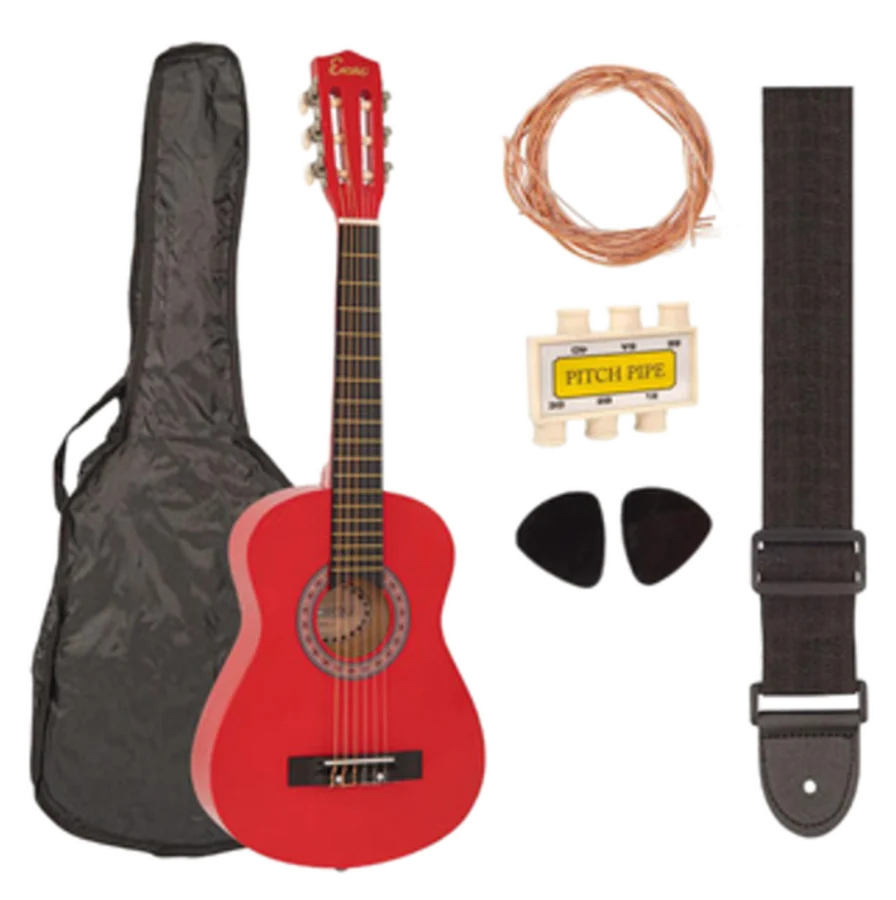
1/2 size
Nylon-string acoustic
Ages 4 to 8
-
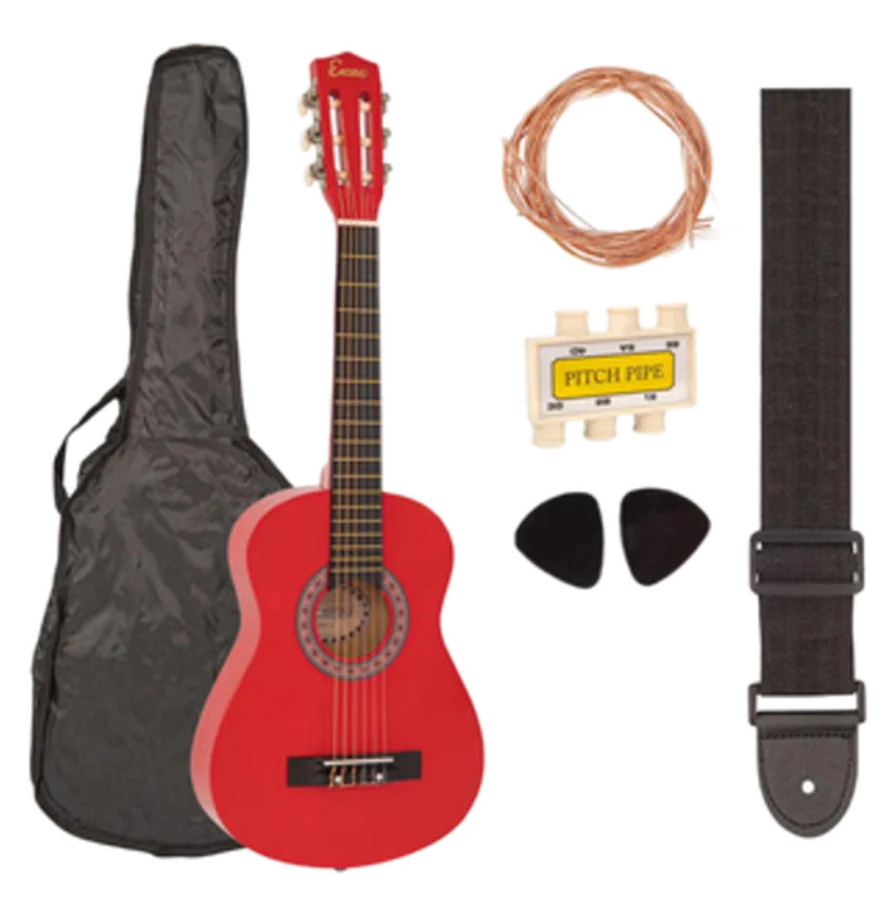
3/4 size
Nylon-string acoustic
Ages 8 to 10
-
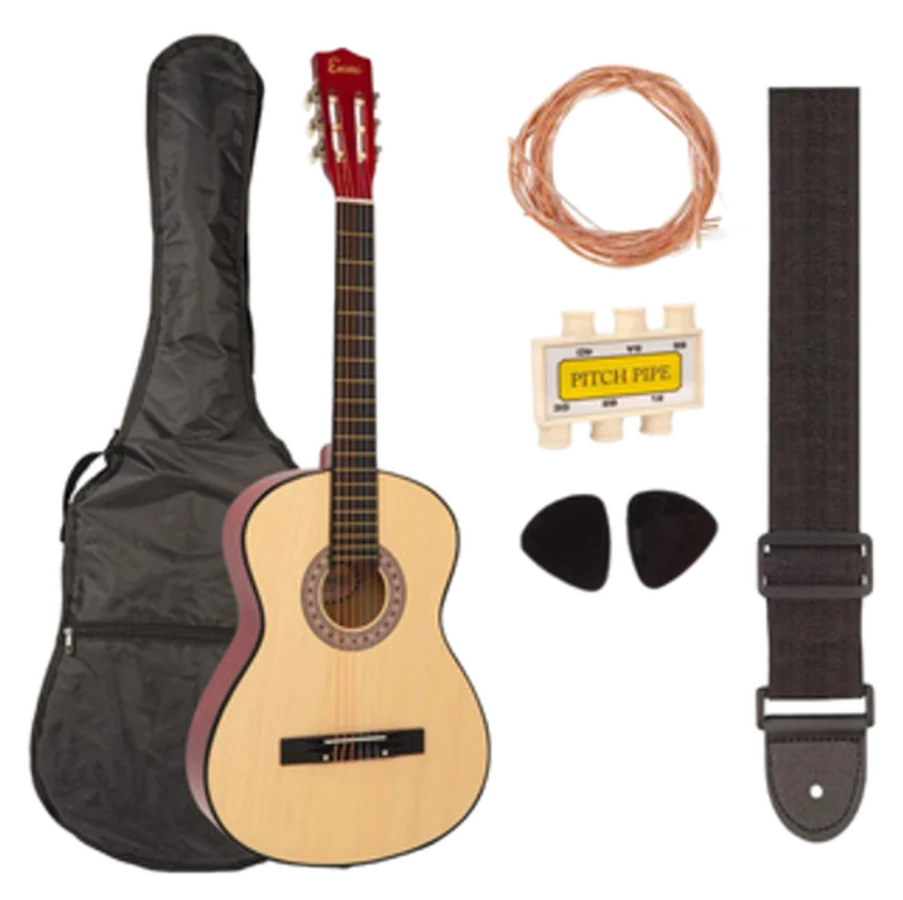
4/4 full size
Nylon-string acoustic
Ages 10 to adult
-
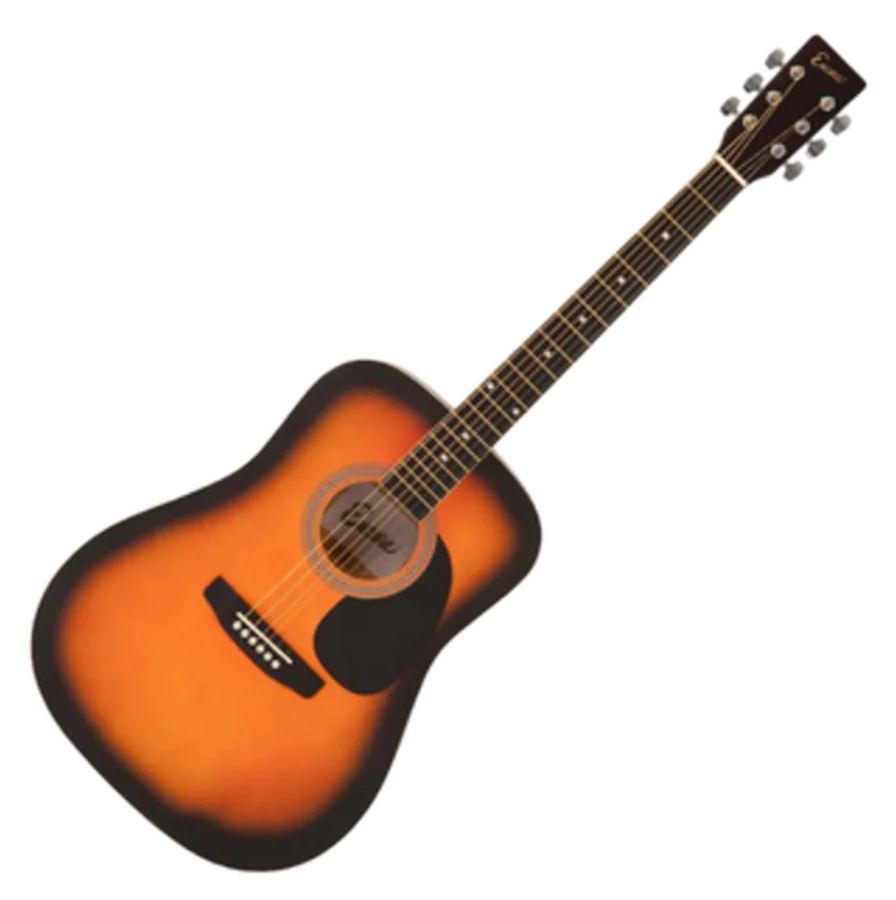
4/4 full size
Steel-string acoustic
Ages 10 to adult
Three kinds of guitar
Choose by the music you want to play. Nylon strings are softer on the fingers and suit classical and flamenco playing. Steel strings are brighter and louder, and suit pop, rock, country, folk, jazz and blues.
-
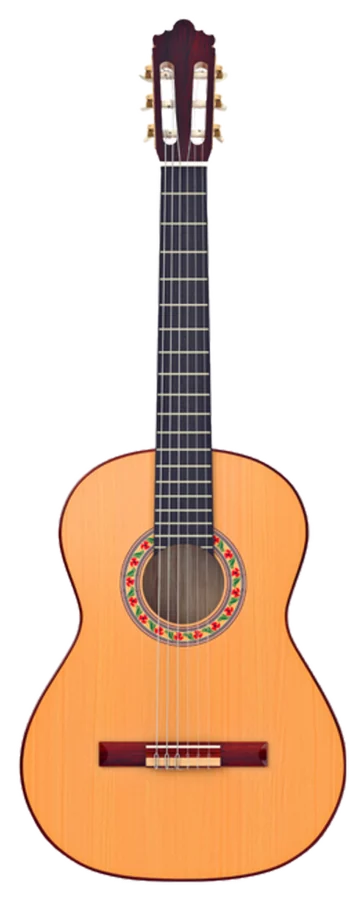
Classical guitar
Nylon strings
- Used in classical and flamenco
- Usually played with the fingers, not a plectrum
- A wide, flat neck and soft strings: a gentle first guitar
-
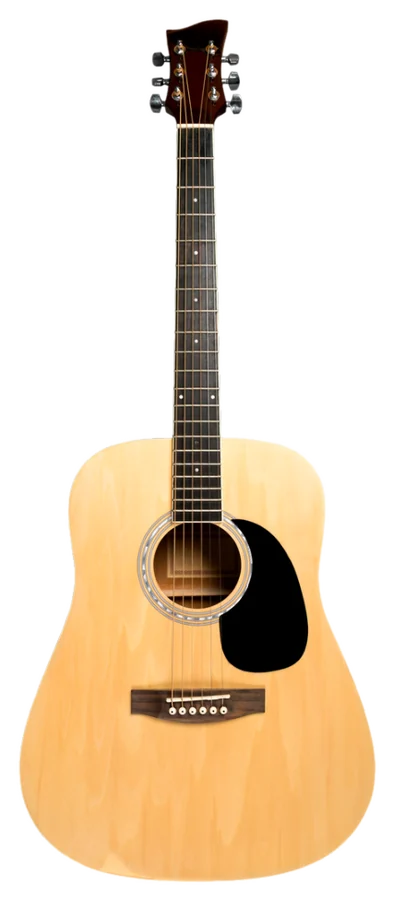
Acoustic and electro-acoustic guitar
Thicker steel strings
- Used in pop, rock, country and folk
- Usually played with a plectrum
- Can be picked or strummed; an electro-acoustic adds a socket to plug in
-
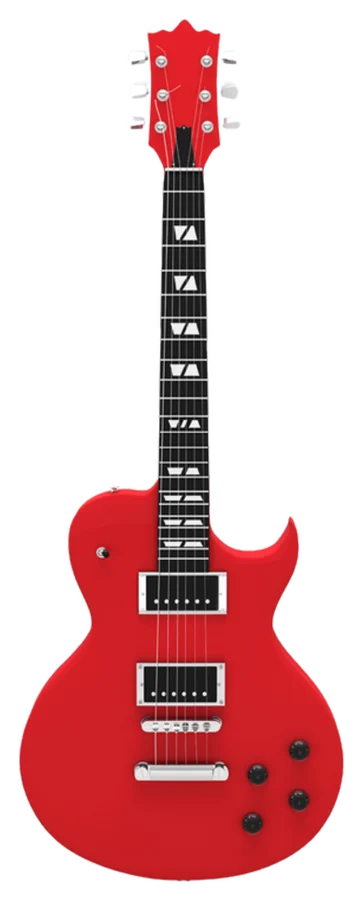
Electric guitar
Thinner steel strings
- Used in rock, jazz and blues
- Usually played with a plectrum
- Can be picked or strummed, through an amplifier
Although these guitars may look different, they are all essentially the same musical instrument.
From the book. They all have six strings and are tuned the same way, so what you learn on one carries over to the others.
What a starter pack contains
A starter pack saves you hunting for the basics. The three nylon-string packs shown above each include:
- The guitar
- A bag
- Spare strings
- A pitch pipe
- Picks
- A strap
Check what is in the pack you are considering before you buy.
A short buying checklist
Five things to look at before you pay, whatever the shop says.
- Size and comfort
- You should be able to sit with the guitar, reach the first frets and rest your arm without strain. A guitar that is too big makes everything harder.
- Action and playability
- Action is the gap between the strings and the fretboard. If the strings sit high, pressing them hurts and chords buzz. Ask for a setup if the guitar feels stiff.
- Tuning stability
- A guitar that will not stay in tune is discouraging. Tune it, play for a few minutes, and check again. Slipping tuning pegs are a warning sign.
- Try before you buy
- If you can, hold the guitar and play a few notes. Ask a teacher or an experienced player to come along, or to look at it afterwards.
- A clip-on tuner
- Cheap, accurate and quick. It clips to the headstock and reads the vibration, so it works even in a noisy room.
Got your guitar? Start in the right order.
Learning The Guitar: Initial Series begins where this page ends: posture, string names and tuning, then chords and pieces. £14.99 introductory price, instant PDF download.
Already tuning up? Watch the free tuning lesson.